The resurrection of creative disagreement
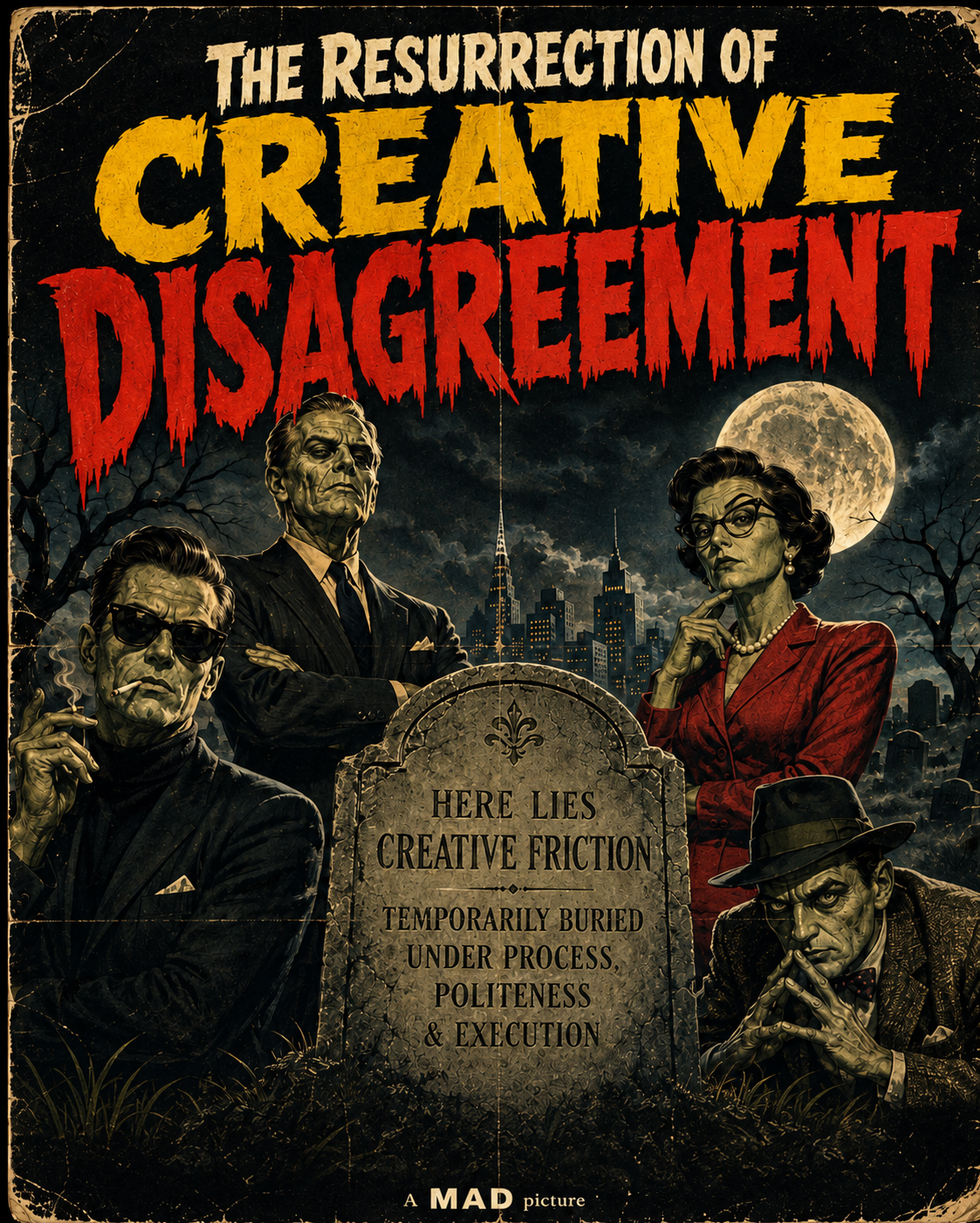
In the 1950s, Bill Bernbach introduced what was then a radical idea: pairing copywriters and art directors as equal creative partners. That deliberately engineered creative friction became the model for almost every advertising agency in the world.
Today, we are once again passionately debating how – and, above all, where – creative people should work together. One side argues that good ideas need proximity, spontaneous exchange and shared energy. The other argues that good ideas need focus, autonomy and the freedom to work wherever people are most productive.
But perhaps this debate is increasingly missing the point. Mathias Richel recently wrote a remarkably insightful and nuanced article about the supposed return of agency culture – link in the comments. The real question, he argues, is not how often people come into the office. It is: Which kinds of collaboration actually require proximity?
AI gives that question an entirely new significance. What do creatives still need each other for when AI can generate ideas, copy, variations and visuals within seconds for them? Probably for exactly what AI cannot take off our hands: Judgement. Friction. Conviction. Responsibility. The more AI takes over the production of possibilities, the more important the shared debate becomes about which of them are actually worth pursuing.
And that was always the real core of great creative collaboration: discussing, rejecting, challenging, sharpening – and ultimately committing to an idea together. Perhaps we simply lost sight of it somewhere between deadlines, deliverables and an ever-growing amount of operational execution. AI is therefore not the end of creative collaboration. It may be our chance to return to its actual core.